Ethanol precipitation is a common method used to purify and/or concentrate RNA, DNA and polysaccharides from aqueous solutions by adding ethanol. This forces the nucleic acid to precipitate out of solution.
DNA precipitation happen with the correct concentration of positive ions is present in solution. Too much salt will result in a lot of salt co-precipitating with DNA, too little will result in incomplete DNA recovery.
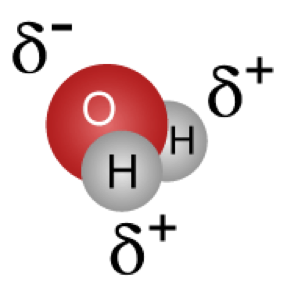
DNA is polar due to its highly negative charged phosphate (PO3-). This polarity, based on the principle of "like dissolves like", makes it soluble in water, which is also highly polar.
Salt (mostly sodium acetate Na+ [CH3COO]-.) is added in protocol to neutralize the charges on sugar phosphate backbone. As the mechanism suggests, the solution has to contain positive ions for precipitation to occur; usually Na+, NH4+ or Li+ plays this role.
Salt breaks down into positively charged sodium ions neutralizing the negative charge on the PO3- groups on Nucleic acids, creating less hydrophilic molecules, and therefore much less soluble in water.
Ethanol is much less polar than water, with a dielectric constant of 24.3 at 25 °C. Adding ethanol to solution disrupts the screening of charges by water (Coulomb's Law applies here).
If enough ethanol is added , the electrical attraction between (PO3-) groups and positive Na+ ions present in solution becomes strong enough to form stable ionic bonds. This make the nucleic acid less hydrophilic, causing it to drop out of solution and DNA precipitate .
Optimal incubation time depends on the length and concentration of DNA. Smaller fragments and lower concentrations will require longer times to achieve the same recovery. During incubation DNA, some salts will precipitate from solution, which is collected by centrifugation
After centrifugation the supernatant solution is removed, leaving a pellet of crude DNA. Whether the pellet is visible depends on the amount of DNA and on its purity (dirtier pellets are easier to see) or the use of co-precipitants.
Ref: link1 , link2
Wednesday, 2 July 2014
Monday, 16 April 2012
Scientific Tools & Tips - Material Grades
ACS Grade: Materials conforming with the specifications and procedures outlined in the American Chemical Society Specifications, 9th Edition, 2000.
Analytical Grade: Designates reagents suitable for use in analytical procedures.
Biotechnology Grade: Materials equivalent to Ultra Pure, but particularly suitable for use in Molecular Biology applications. Tested for specific contaminants such as nucleases and bacterial (?) where appropriate.
Certified/Certifiable Grade: Materials, typically dyes and stains, that meet the requirements of the Biological Stain Commission. Certified reagents have been tested and validated by the Biological Stain Commission.
Electrophoresis Grade: Material specially for Electrophoretic applications
High Purity Grade: Materials of superior quality where there are no published standards.
Reagent Grade: High Purity materials which meet the specifications noted in BBI’s catalog.
Technical Grade: Designates materials of selected commercial or industrial quality.
Ultra Pure Grade: Material with a purity level exceeding the various monograph grades.
USP Grade: Materials conforming with the specifications and procedures outlined in the United States Pharmacopeia, 26th Edition, 2003
Reference
Analytical Grade: Designates reagents suitable for use in analytical procedures.
Biotechnology Grade: Materials equivalent to Ultra Pure, but particularly suitable for use in Molecular Biology applications. Tested for specific contaminants such as nucleases and bacterial (?) where appropriate.
Certified/Certifiable Grade: Materials, typically dyes and stains, that meet the requirements of the Biological Stain Commission. Certified reagents have been tested and validated by the Biological Stain Commission.
Electrophoresis Grade: Material specially for Electrophoretic applications
High Purity Grade: Materials of superior quality where there are no published standards.
Reagent Grade: High Purity materials which meet the specifications noted in BBI’s catalog.
Technical Grade: Designates materials of selected commercial or industrial quality.
Ultra Pure Grade: Material with a purity level exceeding the various monograph grades.
USP Grade: Materials conforming with the specifications and procedures outlined in the United States Pharmacopeia, 26th Edition, 2003
Reference
One-4-ALL Genomic DNA Miniprep Kit
EZ-10 Spin Column Blood and Tissue Genomic DNA minipreps kit is designed for rapid purification of genomic DNA from fresh, frozen or paraffin-embedded animal tissues, cells, blood, or bacteria.
- OD260/OD280 of purified DNA is generally 1.7~1.9
- Preparation of high quality genomic DNA with a molecular weight <=20kb
- Fast and easy processing use a rapid spin-column format
- Compatible with many downstream applications such as PCR, restriction digestion and hybridization
- No phenol/ chloroform extraction or ethanol precipiration is required
- High yield and reproductivity
- Fit for a variety of sample source
Proteintech New publications
For more publication, click here
USCN Life top 10 product literature
Over 25,000 ELICA/ CLIA kits and antibodies available. Contact us for ELISA kit enquiry
| Product | Article title | Journal Title |
|---|---|---|
| Mouse BALP ELISA Kit Cat. E1091m | USP1 Deubiquitinates ID Proteins to Preserve a Mesenchymal Stem Cell Program in Osteosarcoma | Cell |
| Mouse Insulin ELISA Kit Cat. E0448m | Inhibition of SREBP by a Small Molecule, Betulin, Improves Hyperlipidemia and Insulin Resistance and Reduces Atherosclerotic Plaques | Cell Metabolism |
| TAT polyclonal Antibody Cat. P4087Rb | Down-Regulation of Tyrosine Aminotransferase at a Frequently Deleted Region 16q22 Contributes to the Pathogenesis of Hepatocellular Carcinoma | Hepatology |
| Rabbit anti-LRP1 antibody Cat. P3621Rb | Lactoferrin-conjugated superparamagnetic iron oxide nanoparticles as a specific MRI contrast agent for detection of brain glioma in vivo | Biomaterials |
| rat adiponectin ELISA kits Cat. E0605r | An cell-assembly derived physiological 3D model of the metabolic syndrome, based on adipose-derived stromal cells and a gelatin/alginate/fibrinogen matrix | Biomaterials |
| human PYR crosslinking ELISA kit Cat. E1466h | The impact of low levels of collagen IX and pyridinoline on the mechanical properties of in vitro engineered cartilage | Biomaterials |
| Human P-Selectin ELISA kit Cat. E0115 | Block poly(ester-urethane)s based on poly(3-hydroxybutyrate-co-4-hydroxybutyra- te) and poly(3-hydroxyhexanoate-co-3-hydroxyoctanoate) | Biomaterials |
| CTX-Ⅰ ELISA Kit Cat. E0665m | Atp6v0d2 Is an Essential Component of the Osteoclast-Specific Proton Pump That Mediates Extracellular Acidification in Bone Resorption | Journal of Bone and Mineral Research |
| sFAS/Apo-1 ELISA Kit Cat. E1153h | Aging might increase myocardial ischemia / reperfusion-induced apoptosis in humans and rats | AGE |
| GM1 ELISA Kit Cat. E1457 | Increased serum levels of anti-ganglioside M1 auto-antibodies in autistic children: relation to the disease severity | Journal of Neuroinflammation |
Subscribe to:
Posts (Atom)
